Evidence That Was Not Examined
Despite the fact that regulations dictated that an accident in Denmark should be investigated by the Danish accident investigation board, with support from Norway (the airline's home country) and the USA (the aircraft manufacturer), it was decided relatively immediately after the accident that the Norwegian accident investigation board would investigate the accident. Asker and Bærum Police District led the criminal investigation with assistance from Kripos regarding identification work and investigations into whether anything criminal had occurred in connection with the accident. The primary focus was on determining whether explosives had been used to cause the accident, which was reminiscent of the Lockerbie disaster that had occurred less than a year earlier.
The identification work and autopsies were carried out in Denmark, with assistance from Kripos, particularly regarding the gathering of information that could be used in the identification work. During the autopsies, some fragments were found, which were sent to Norway for further examination. Kripos also made findings that they needed assistance to investigate. They therefore contacted RARDE in England, which had assisted with the investigation of the Lockerbie disaster.
Furthermore, the accident investigation board used, among others, Veritec, a subsidiary of Det Norske Veritas, and the Canadian firm Accident Investigation & Research Incorporated (AIR) for technical investigations. With the exception of the RARDE reports, it appears that the technical investigations were released by the accident investigation board. Despite the fact that the RARDE report was not classified in the first instance, both the accident investigation board and Asker and Bærum Police District chose to withhold this report.
In contrast to the assessments made after the accident, Oslo Police District determined that both parts of the RARDE report could be released. Although the RARDE report does not provide any leads as to what the triggering factor of the accident was, there are some significant findings that have not been addressed in the accident report. This may help to understand the secrecy.
High-Velocity Fragment
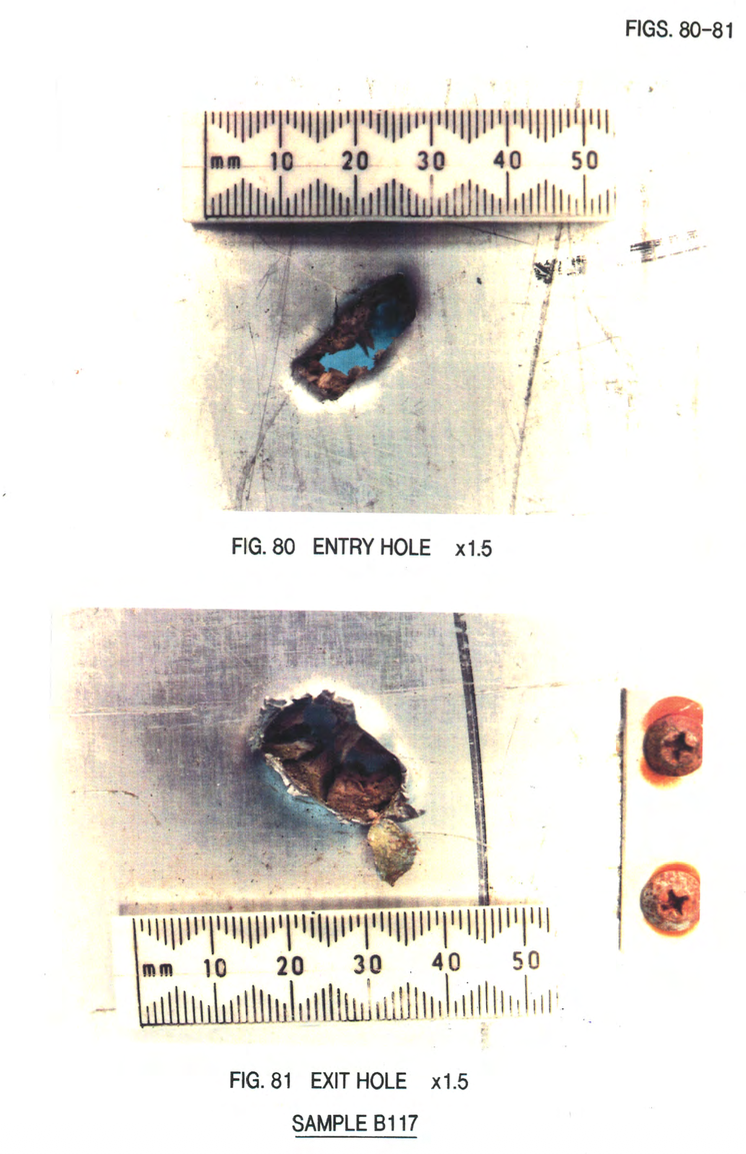
One of RARDE's most interesting findings is a hole from a projectile that has passed through a shelf panel inside the aircraft. Already in the initial examinations, RARDE took an interest in this hole and established that it had not occurred as a result of the impact. It is worth noting that no parts of the aircraft move so fast—not even the tips of the propeller blades, which remain below the speed of sound—and it is therefore unlikely that the fragment originated from the aircraft.
«Item B117 has less obvious damage, although trials so far completed suggest that the velocity of the fragment or projectile that penetrated the sandwich structure were greater than expected from any event associated with the breakup and impact of the aircraft. There is thus the possibility that a fragment formed by an explosion or, more likely, a secondary projectile may have caused the hole.» (RARDE, 1990, p. 8)
In part two of the report, RARDE describes more about their conclusions after firing tests, in which they attempted to recreate a corresponding hole in the same panel:
«With all the evidence obtained and reported we conclude the following: The penetrative object was probably of irregular shape. The mass was approximately 5 grams. The object was probably of composite nature, ie hard core with a softer outer covering. The velocity at impact was in the region of 650 m/s.» (RARDE, 1991, p. 10)
(RARDE, 1990, Figs. 80–81) |
Holes in the Fuselage
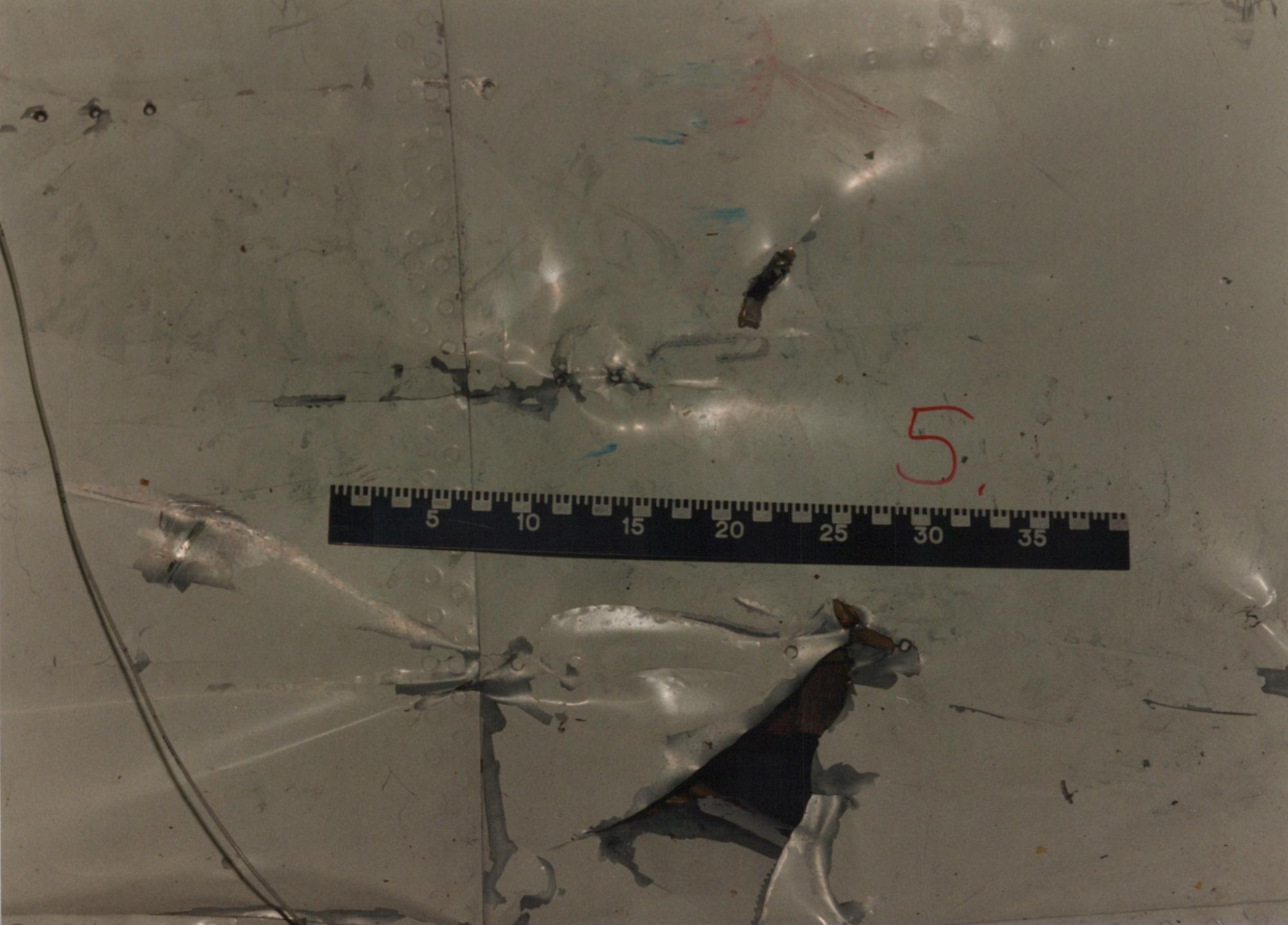
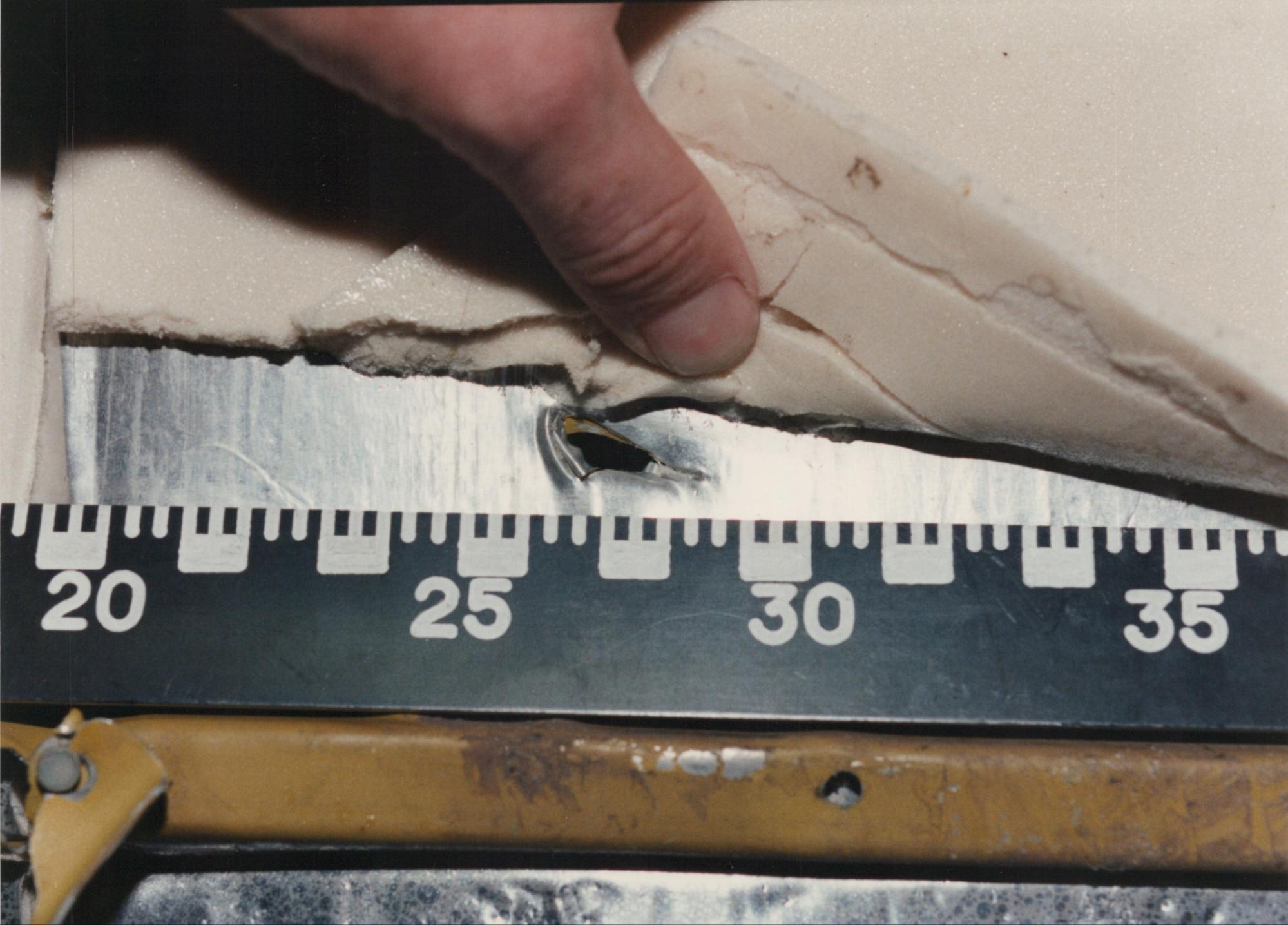
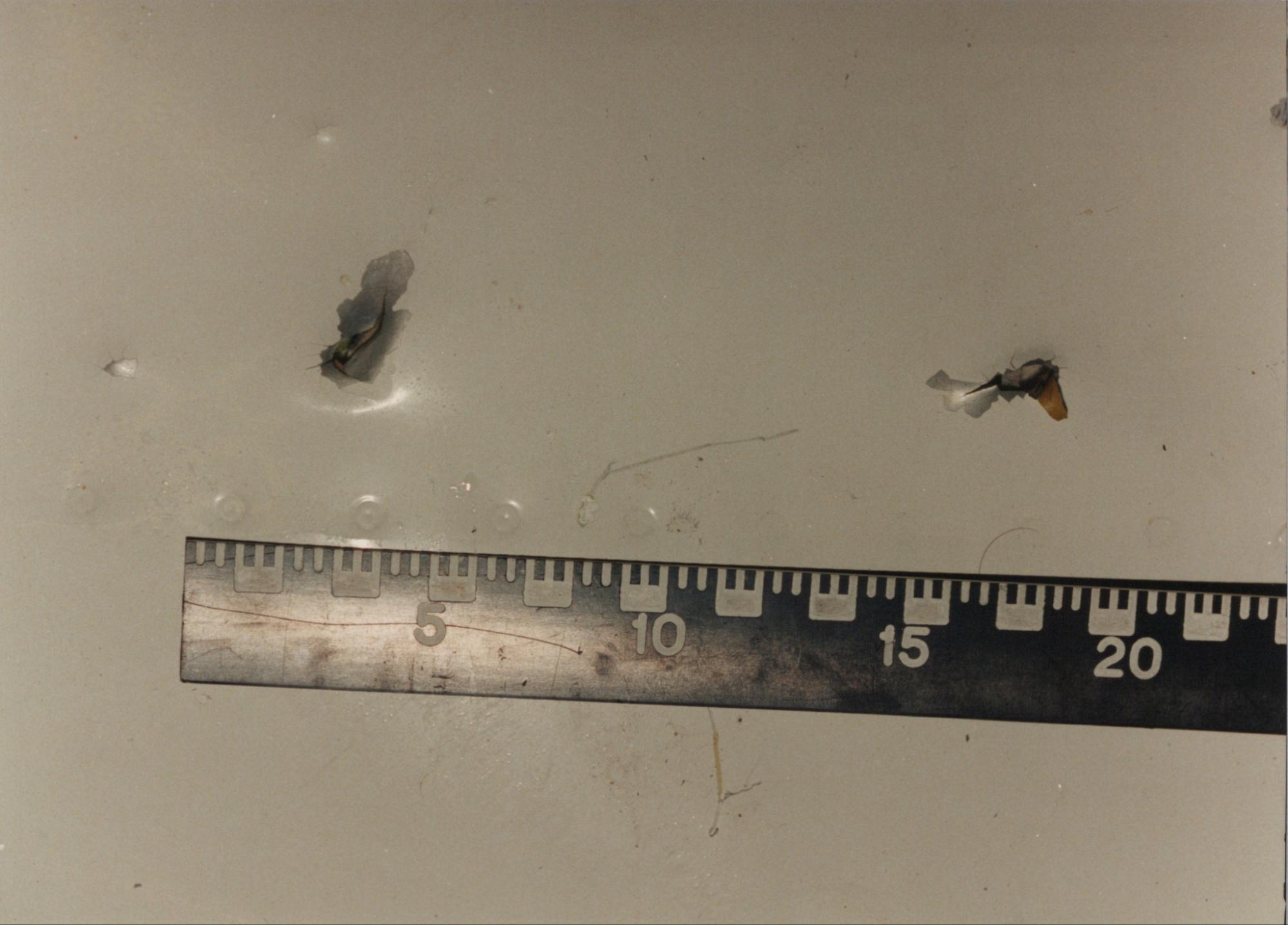
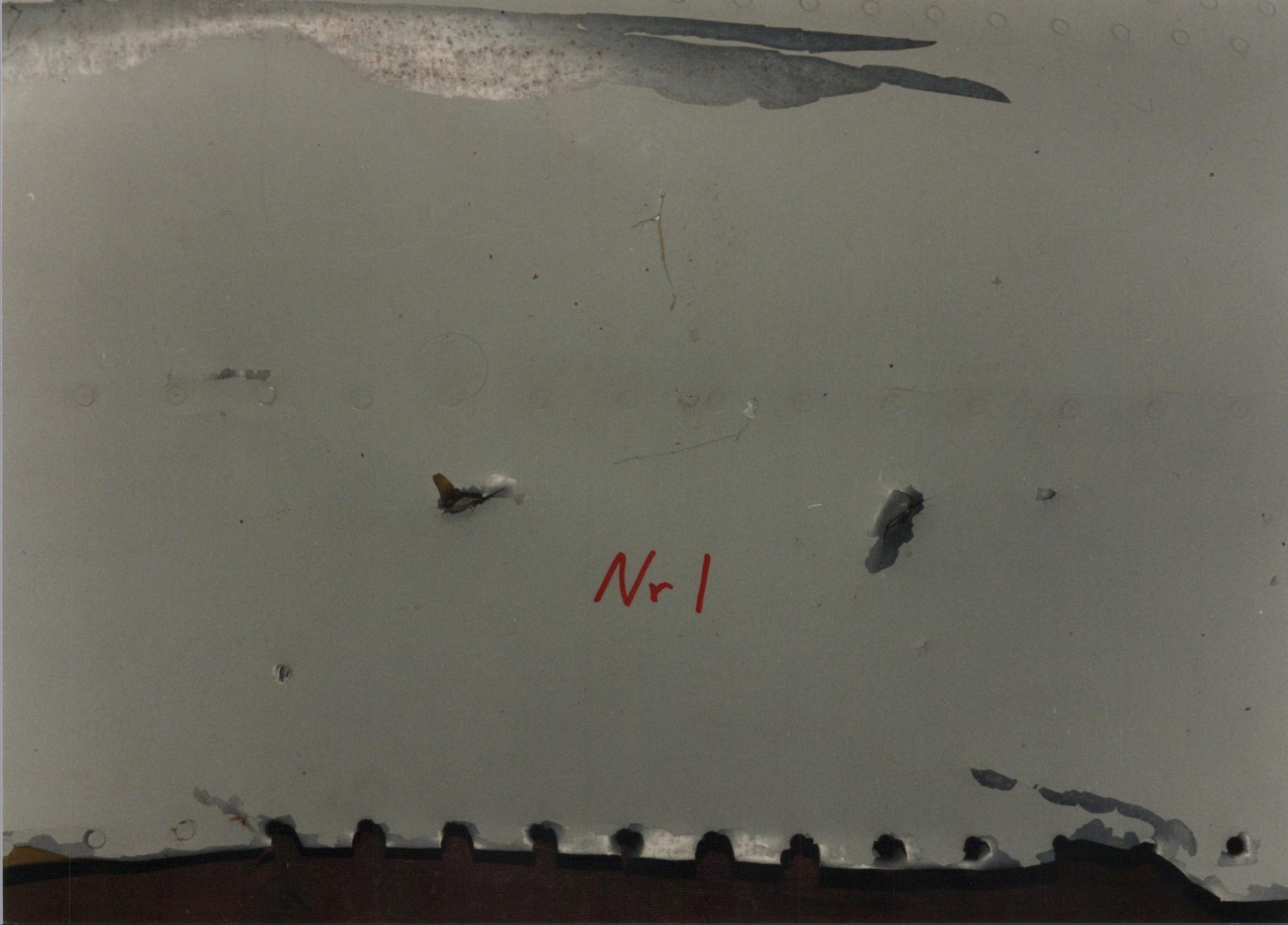
A high-velocity fragment that has travelled at 650 m/s through a shelf panel inside the aircraft cannot in practice have originated from the accident sequence itself. An explosion is required to accelerate a fragment to that velocity. When there are no traces of explosion or fire in the aircraft, this means in practice that the fragment must have come from outside the aircraft and, in that case, penetrated the fuselage. Wreckage with entry holes or exit holes of corresponding size would be observations that strengthen the hypothesis that the aircraft was struck by fragments from the outside.
If one studies the photographs that Kripos took in connection with the recovery of wreckage, there are several images showing holes that may be consistent in size with the fragment hole from the shelf panel on the inside of the fuselage.
Break-Up in the Air
The aircraft broke in two during the final part of the accident sequence. Although the aircraft was out of control, it does not seem logical that the aircraft breaks in two without the fuselage having been damaged in a way that weakens its structural integrity.
If the aircraft was struck by many fragments on the left side, the structure will be weakened such that a natural consequence may be that the aircraft breaks apart to the right. It will be difficult to find fragment holes in an area that breaks apart, since the break-up will naturally occur through where the fuselage has been weakened by holes. When the Partnair aircraft's nose section was additionally the part that hit the water first, it was also where the parts were torn into the smallest pieces. The reconstruction shows that many parts were not recovered from the relevant area on the left side forward.
The Partnair aircraft, reconstructed, left side forward. |
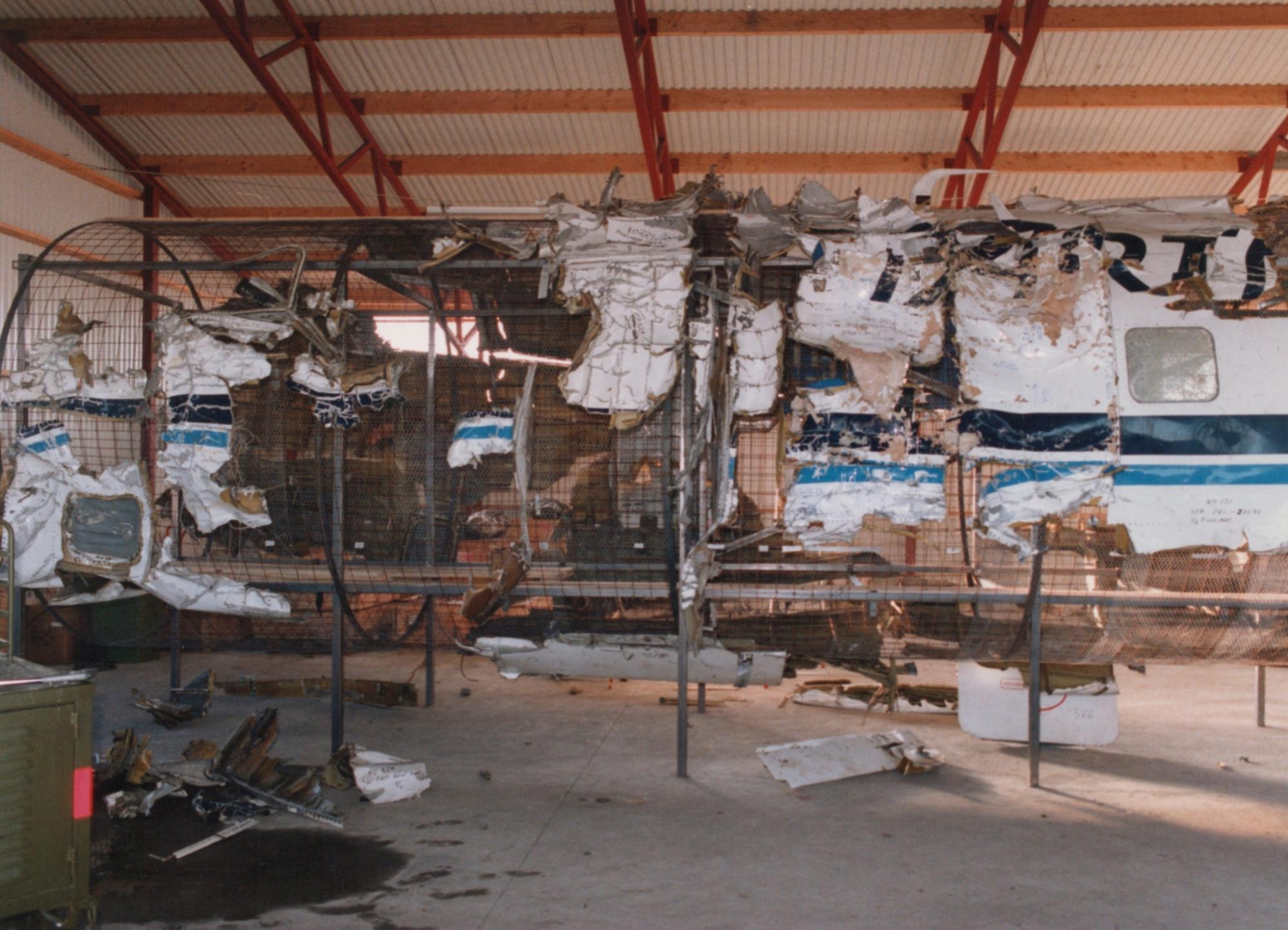
«All of the physical evidence therefore supports in-flight separation of the nose section of the fuselage starting at the left side at Station 261 and propagating to the right side. Analysis of the panel fragmentation and fractures from the left to the right side on the nose section remains confirms this failure progression.» (Accident Investigation & Research, 1992, pp. 10–11)
RDX
Findings of RDX were made on a total of two aircraft parts. Only trace amounts of RDX were found, and RARDE could not exclude that this was due to contamination. In the accident report, reference is only made to trace amounts of RDX being found on one part. In the RARDE reports, however, it is described that findings of RDX were made on two parts. Contamination cannot be ruled out in any case, but if RDX is present on two parts, it is less likely to be due to contamination than if it is on only one part—particularly if the parts were not recovered at the same time and transported together.
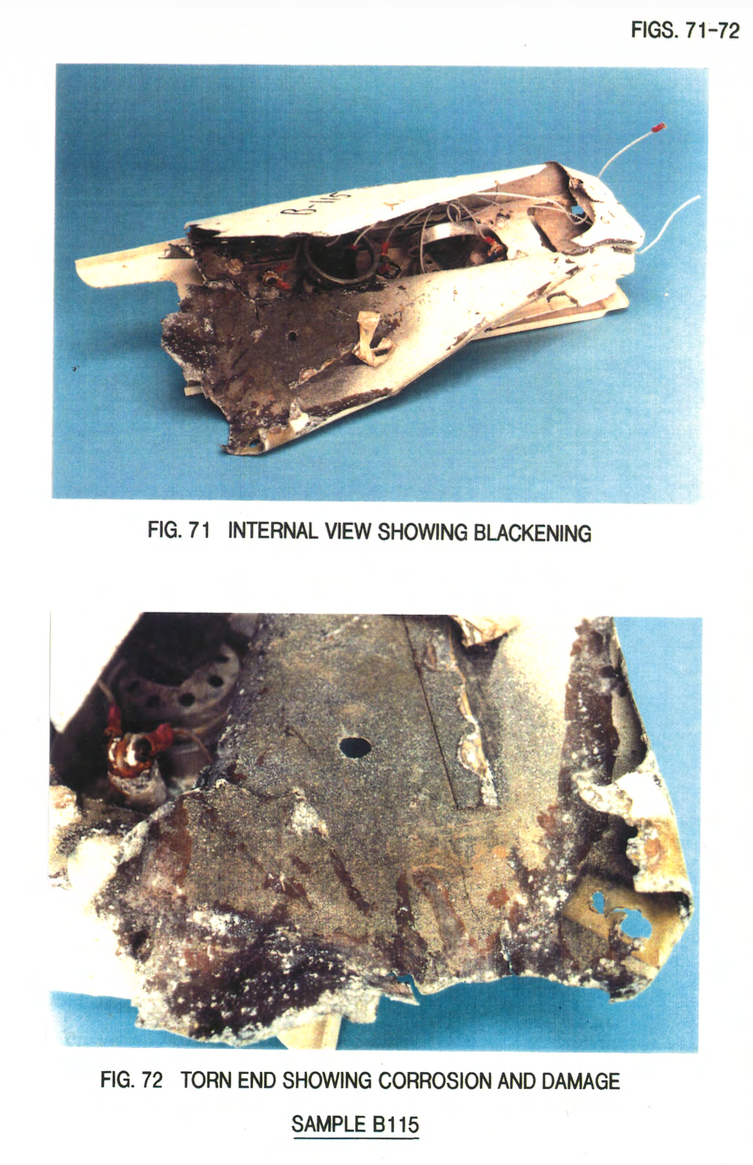
B115
B115 is a part of the interior, specifically the panel with the air duct above the passenger seats. All parts examined by RARDE for part 1, including B115, were delivered in December 1989:
«All the material was delivered by Det Inspector Leif Oren on 13th December 1989.» (RARDE, 1990, p. 1)
«Recovered from sea-bed … B115 Part of panel with cabin lights.» (RARDE, 1990, p. 2)
«Approximately 6 nanograms of RDX were found in the swabbing from Item B115. The identity of the explosive detected was confirmed in a second GC/TEA system.» (RARDE, 1990, p. 10)
«The quantity of RDX detected was, however extremely small. It is considered that, whilst such a trace could have originated from an explosion, the levels are so low that the possibility of innocent contamination cannot be excluded.» (RARDE, 1990, p. 11)
(RARDE, 1990, Figs. 71–72) |
B142
«B142 – Part of ventilation/heating tube above seats on left of cabin.» (RARDE, 1991, p. 1)
«A response corresponding to RDX was observed on all three GC/TEA systems for the item identified as B142. However, the response equated to a level more usually encountered as background contamination.» (RARDE, 1991, Annex A, p. 2)
Contamination
If only one part with trace amounts of RDX is found, the probability is high that it is due to contamination. The probability decreases considerably when two parts are involved. In this case, findings were made on two parts. The two parts were recovered by two different vessels at two different times, one of which was a fishing boat. They were transported to RARDE at different times. This makes it highly unlikely that the RDX findings are due to contamination.
It seems plausible that RARDE raised questions regarding the RDX findings, as Kripos sent a letter to RARDE following a meeting between Kripos and Veritec at RARDE in England in September 1990. The letter describes how the parts were found and transported:
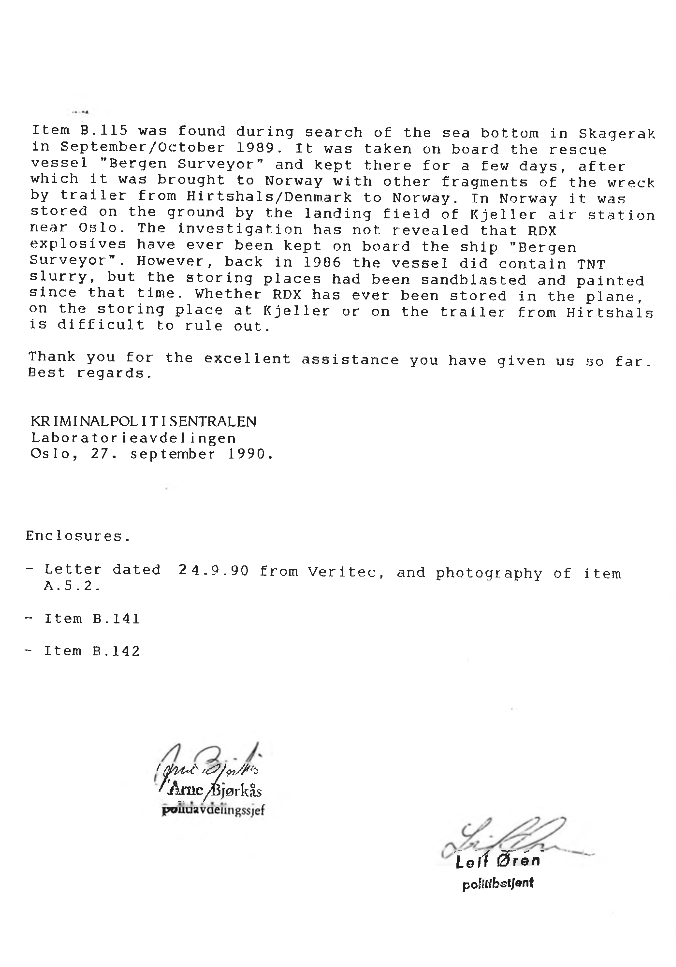
«B. 115 was found during search of the bottom in Skagerak in September/October 1989. It was taken on board the rescue vessel "Bergen Surveyor" and kept there for a few days, after which it was brought to Norway with other fragments of the wreck by trailer from Hirtshals/Denmark to Norway.» (Bjørkås, 1989, p. 2)
Regarding parts B141 and B142, Bjørkås writes:
«Both items have been brought up from the bottom by a trawl in January 1990, and brought to Norway from Hirtshals in Denmark by the Board on aviation accidents. The material was transported by trailer.» (Bjørkås, 1989, p. 1)
(Bjørkås, 1989, p. 1) |
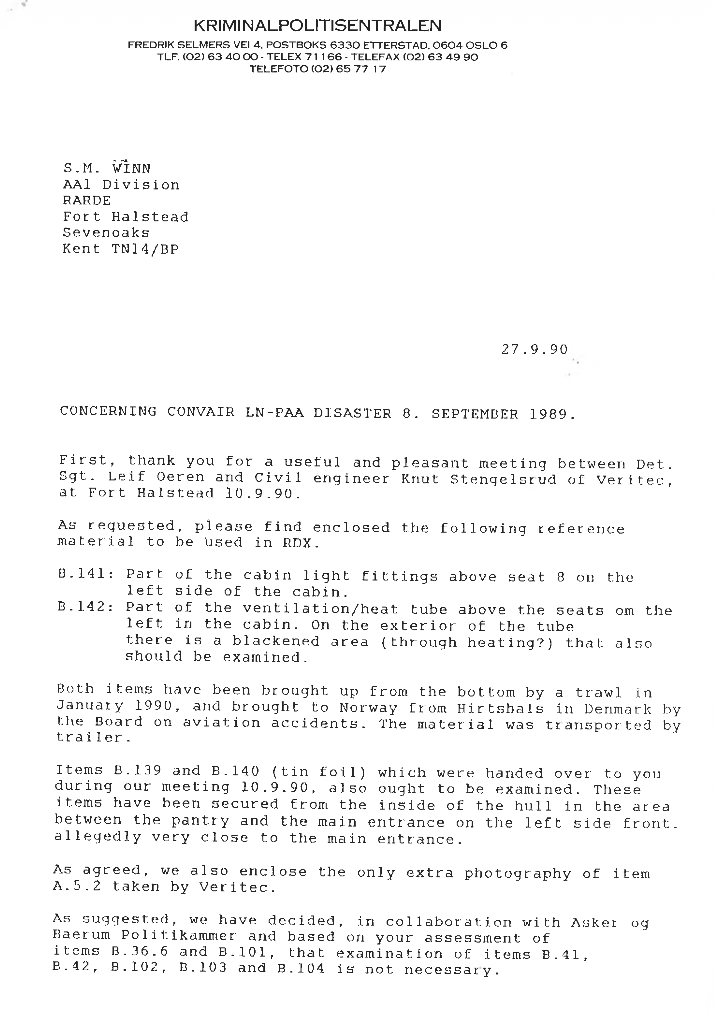
(Bjørkås, 1989, p. 2) |
Soot-Covered Parts
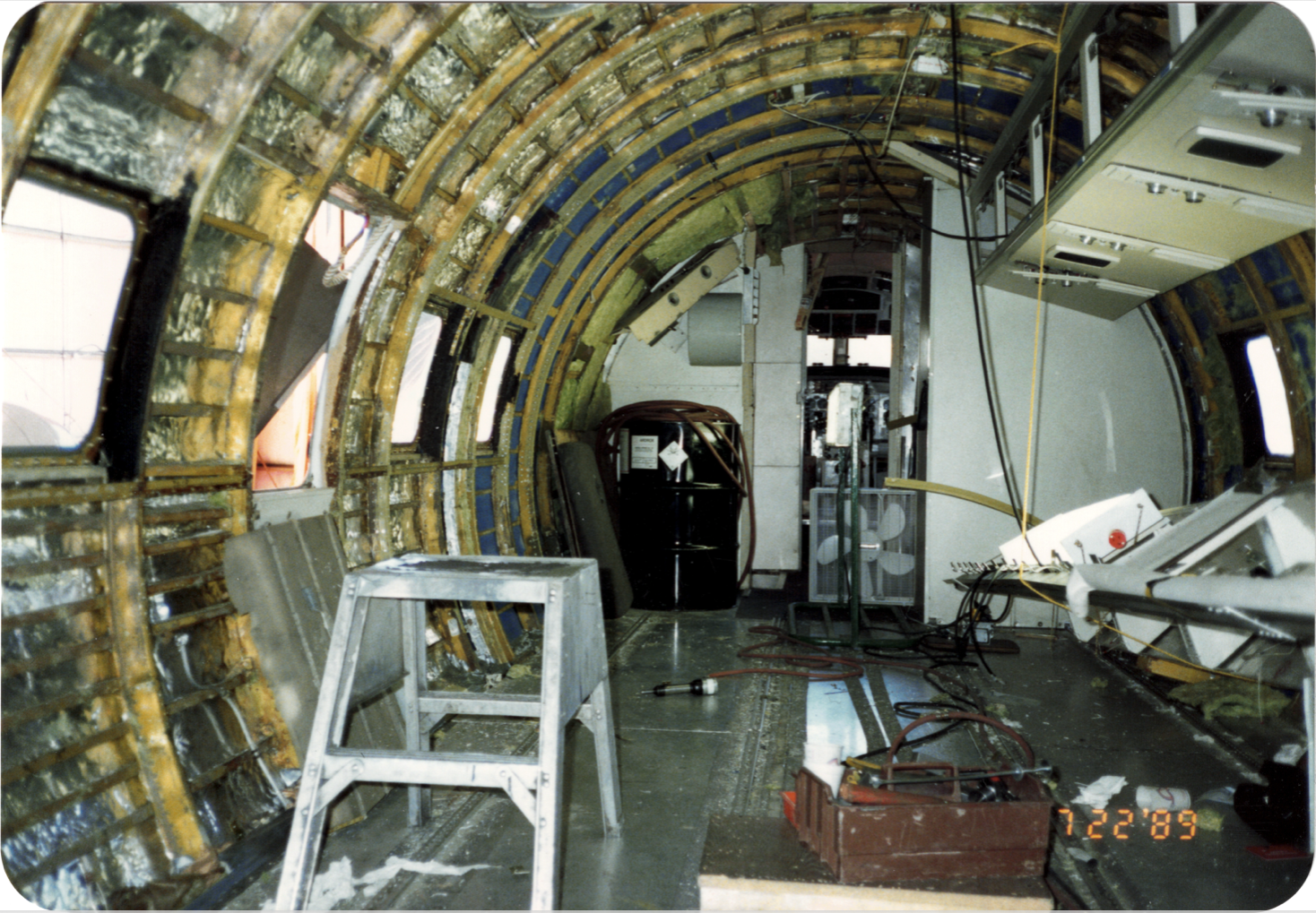
There are several parts from the interior and insulation material in the area of the main door that show traces of brief heating. Although the aircraft was from the 1950s, the interior was brand new and had only been in use for two weeks when the accident occurred. It is therefore highly probable that the sooting occurred as part of the sequence of events. No findings of explosion or fire have been made, so there is no natural reason why any parts of the aircraft should have been soot-covered.
Photograph from the installation of the interior, July 1989. |
B115, as depicted in the RDX section, shows clear traces of sooting. RARDE also examined:
«B139, B140, B143, B144, B145 – Aluminium-backed insulation material taken from inside the fuselage in the region of the main cabin entrance door.» (RARDE, 1991, p. 1)
«Examination of Items B139 and B140 showed that the darkened areas appeared to be regions of thickened oxide but there was no evidence of prolonged heating when the insulating material behind the dark area was examined. However, it is possible that the area could have been subjected to transient heating.» (RARDE, 1991, p. 11)
In the letter from Bjørkås, it is clear that Kripos also noted the soot-covered parts. About B142, he writes:
«On the exterior of the tube there is a blackened area (through heating?) that also should be examined.» (Bjørkås, 1989, p. 1)
Insulation material with discoloured surfaces was also examined by the Centre for Industrial Research. In their report, which was sent to the Air Force Supply Command, Analytical Division, they wrote:
«Given the considerable amount of carbon on the aluminium surface, this suggests that there has been heat exposure.» (Windsland, 1990, p. 1)
Molten Metal
Due to its heavy weight, iron is not a material normally used in aircraft, and it is therefore not expected to find this metal during the investigation of an aircraft accident. When iron is found, it is natural to question where it may have originated. Particles of molten iron that solidified in the air were found. This may have a natural explanation, but it cannot be ruled out that it is related to the accident.
«B114 Part of flight engineer's cockpit seat.» (RARDE, 1990, p. 2)
«Samples recovered by RARDE from B114
This item was submitted for explosives trace detection, but a large number of fragments were recovered as loose debris from the seat cover before the screenings were performed. These fragments were passed to Metal Physics for examination.» (RARDE, 1991, p. 2)
(RARDE, 1991, Fig. 33) |
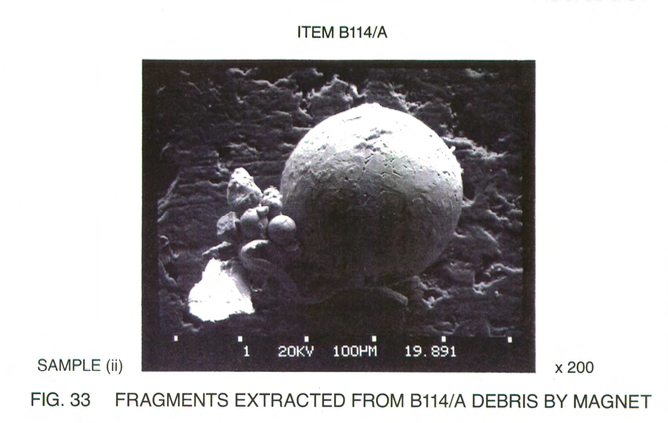
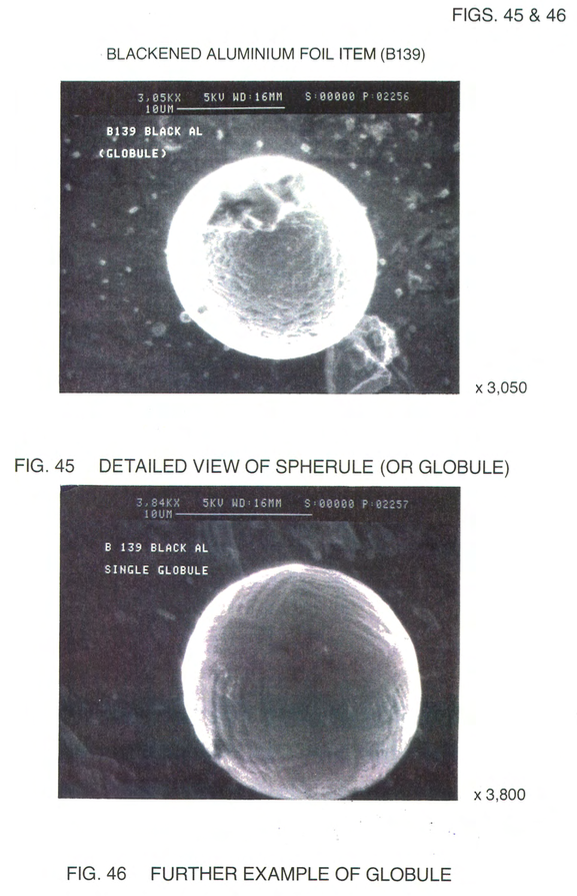
«The presence of the very small spheroidal iron particles on the surface of the bright and the darkened aluminum foil samples is puzzling. They are similar to those recovered from Item B114 (above) and may perhaps have had a common source.» (RARDE, 1991, p. 11)
«Small iron-rich spheroidal particles were observed among the B114 fragments and on the surface of B139 and B140. Their presence in the aircraft is not easily explained, but some possibilities such as debris from welding or grinding operations or some metallurgical process involving melding are suggested.» (RARDE, 1991, p. 13)
(RARDE, 1991, Figs 45 & 46) |
Fragment Shower
During the autopsy, fragments were found in the skin of two passengers. These fragments were examined by RARDE, but the origin could not be established with certainty. More interesting are the nearly invisible fragments, which were also not visible on X-ray, but which the same two passengers were struck by.
Although no conclusions could be drawn regarding the fragment findings, the findings from two passengers are of interest because they are observations that may support certain hypotheses.
«One must conclude from these lesions that the deceased was probably struck by a shower of particles of unknown nature and at least one metal fragment from the right side.» (Institute of Forensic Medicine, 1989, p. 7)
«This deceased was also struck by a shower of particles, but from behind. It is not possible to determine whether they originate from an explosion or a disintegration of the aircraft.» (Institute of Forensic Medicine, 1989, p. 7)
Stippling
When a high-velocity fragment penetrates the aircraft fuselage, high heat is generated which melts metals and other materials the aircraft is made of. From this, microscopic particles can be ejected and strike the passengers inside. Based on the pathological findings, it is reasonable to assume that this type of micro-fragment may have struck passengers who were seated closest to where the fragments penetrated the fuselage. Due to the low weight of the particles, they will only travel a short distance, so in practice only passengers near the point of impact can sustain such injuries.
«Powder tattoo marks are produced by the impact of powder grains on the skin. They are not “powder burns”, but rather are punctate abrasions. Similar markings can be produced by noncombustible particles such as poly-ethylene granules.
The term “powder burns” should never be used because unquestionably and exclusively due to powder grains. If the marks are due one does not know to what phenomenon the term is being applied. Some individuals use the term “powder burns” to signify powder tattooing, whereas others use it to signify searing and blackening of the skin due to the hot gases that occur from combustion of the propellant.
The term “powder burns” dates back to the black powder era, when burning grains of black powder emerging from the muzzle, were deposited on the skin and clothing, where they smoldered, apparently producing actual burns on the skin. Black powder grains could also penetrate into the dermis and produce literal tattooing. The burning grains of black powder were capable of setting clothing on fire, a characteristic not possessed by smokeless powder.
Some authorities use the term “stippling” synonymously with “powder tattooing.” The author prefers to use the term “stippling” in a more generic manner to indicate punctate abrasions of the skin, which while they may be due to powder, may also be due to other materials, e.g., shotgun filler, fragments of intermediary targets. In other words “powder tattooing” is just one form of stippling with the term “powder tattooing” used to refer to stippling to material other than powder or if one is not certain of their origin, then,
one uses the term “stippling.”
The punctate abrasions of powder tattooing cannot be wiped away. Powder
tattoo marks usually heal completely if the individual survives. This is logical, as the injuries are generally confined to the superficial layers of the epidermis.»
(Di Maio, 1999, kapittel 4: Stippling)
Malaysia Airlines Flight MH17
In 2014, a Boeing 777 from Malaysia Airlines (MH17) was shot down over Ukraine. There are certain findings from MH17 that are coincident with the unexplained findings made after the Partnair accident. In contrast to the Partnair accident, the cause of these findings is known, and it may therefore be helpful in understanding what may have happened to the Partnair aircraft.
After both accidents, trace amounts of RDX were found, holes from fragments that passed through the aircraft, sooting from brief high-temperature heating, and molten metal. Both aircraft broke in two.
Smeltet metall
When a warhead explodes, fragments are ejected at several times the speed of sound. Upon impact with the fuselage, large amounts of energy are converted from kinetic energy to thermal energy. This heat was high enough to melt metals and other materials in the aircraft.
«The investigation concluded that these fragments impacted the aeroplane at a very high velocity, thereby deforming the object at the side of the impact. The consequential frictional heat melted the aeroplanes materials (glass, aluminum etc.) and a thin layer of solidified aeroplane material was deposited to the heavily deformed side of the object.» (Dutch Safety Board, 2015, p. 91)
RDX
«Approximately 30 of the 126 swab samples showed traces of mainly two different explosives; the nitroamine RDX and trinitrotoluene (TNT). A few of the 30 samples showed traces of PETN. On the tested missile parts traces of RDX was found.» (Dutch Safety Board, 2015, p. 93)
Fragment Holes
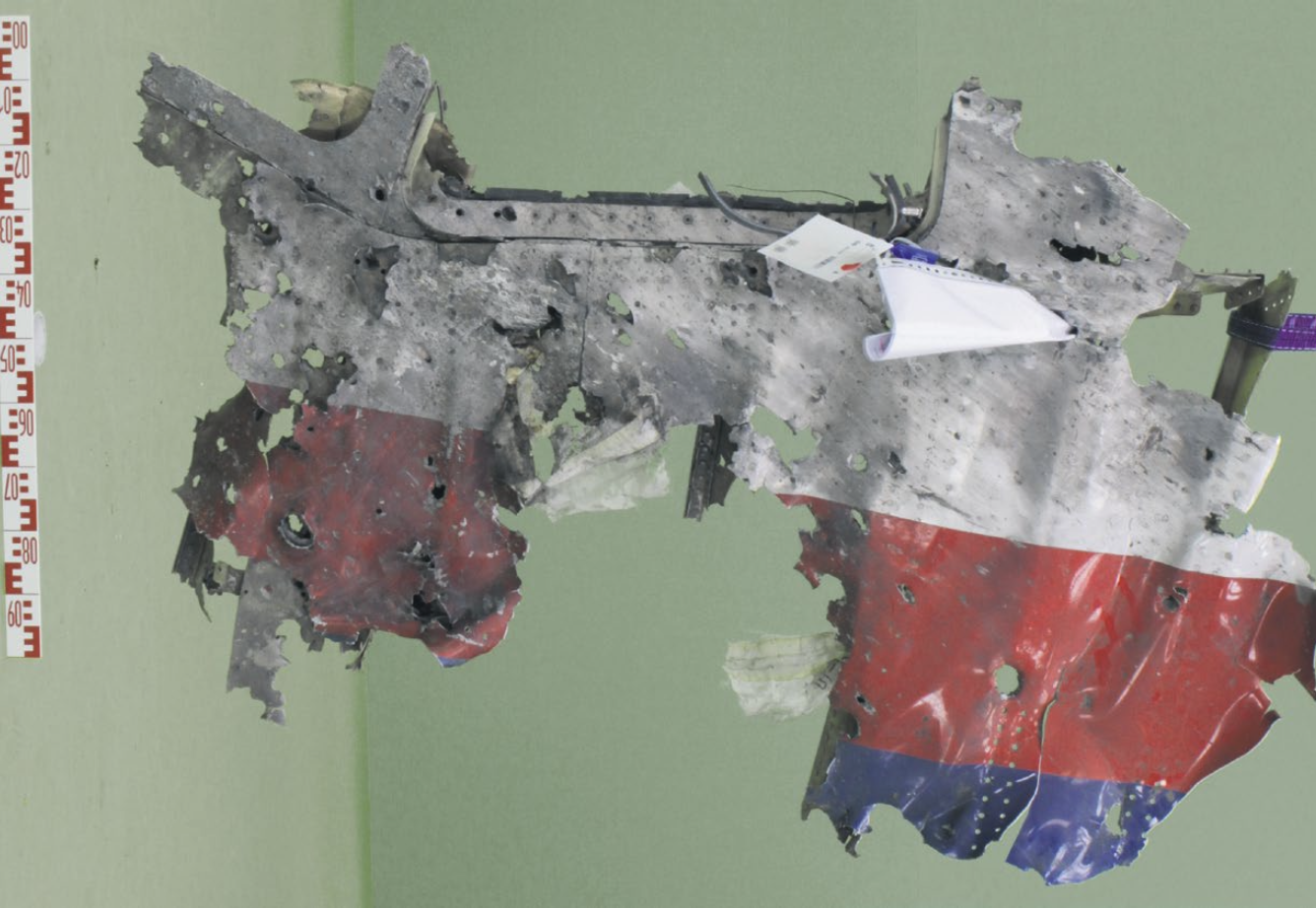
A number of elongated fragment holes were visible in the fuselage panels.
(Dutch Safety Board, 2015, Figure 33) Fragment holes in the fuselage of MH17. |
Sooting
«The floor part left of and below the captain's seat was recovered. This part of the floor was punctured extensively and was also covered in soot and showed signs of heat damage.» (Dutch Safety Board, 2015, p. 65)
Break-Up in the Air
«The cockpit and the front fuselage separated at approximately STA888 from the centre fuselage. Fractures in the cockpit and the forward fuselage were examined because these fractures indicate the start of the break-up.
Multiple perforations were present in the cockpit region (i.e. forward of STA236.5). The left hand side of the cockpit was fractured into small pieces. Therefore, the perforations had probably acted as a crack initiation sites. Due to the presence of these perforations, the fractures in the cockpit region could not be analysed.» (Dutch Safety Board, 2015, p. 150)
The Propellers
The Partnair aircraft's propellers tell an important story. When an aircraft enters a dive, as the Flight Data Recorder showed the Partnair aircraft did, the pilots will invariably pull the engine power all the way back. For certain aircraft types, one can read the pitch of the propellers and determine what engine setting was in effect when the accident occurred. The accident investigation board evaluated the measured pitch of the propellers and interpreted the blade angle:
«A blade angle of 40° is in the upper part of the pitch range for operation with engine settings for cruise speed and with an indicated airspeed of approximately 200 KT.» (The Accident Report, 1993, p. 68)
This is an erroneous conclusion. Propeller pitch was controlled entirely automatically by a mechanical system that ensured the propellers rotated at 1,020 RPM. Without knowing what power setting the engines had, one cannot deduce the aircraft's speed by interpreting the blade angle. The aircraft was flying uncontrolled, and the right propeller was "windmilling" when it hit the water. Given that it was a mechanical mechanism that controlled the propeller angle based on centrifugal force, the system would have controlled pitch all the way down to the stop upon impact with water regardless of the pilots' input.
The right propeller was windmilling when it hit the water, but the left propeller fell off in the air at a relatively low altitude. The left propeller was found approximately 250 metres from the left engine. In practice, there are only two things that can cause a propeller to fall off:
- The gearbox fails and the shaft locks while the propeller continues to rotate
- The propeller is struck by something and deforms so that it tears loose due to its asymmetric shape
Right Engine
«From the visual examination of the L/H power turbine assembly it was found most likely that the FWD shaft end of the rotor had suffered a serious torque overload before the final (water) impact of the engine.
The estimate of the torsional moment required for twisting the shaft permanently fully supports this assumption. The torque values brought to light are far above what can be produced at a water impact when the energy of rotation at this moment is found to be at – or rather close to – zero (referring to rotor blade deformations).» (Veritec, 1990, 90-3015, p. 15)
«From the general follow-up work of the main engine dismantling and the specific examinations carried out, it can be concluded that the L/H engine has been brought to a complete stop before the sequence of major impact occurred.
The R/H engine, however, has still possessed some rotational energy when being impacted, but the level of this energy has been far below the one corresponding to an ordinary service operation. The R/H engine has rotated at least one and a quarter of a turn after the sequence of major impact, suffering serious rotor blade and vane segment deformations and fractures.» (Veritec, 1990, 90-3015, p. 16)
Left Engine
«Before – or when – the L/H engine was brought to a complete stop the P.T. rotor suffered a serious torque overload which led to a permanent deformation (twisting) of the FWD end spline coupling. The torsional moment necessary to cause this deformation is – based on hardness measurement results – estimated to be at the level of 8000 – 10000 Nm. These values are found far above what could be obtained at impact when the appearance of the P.T. rotor blades is taken into account. Only some mechanical obstruction when the rotor was still above a certain level of rotational energy can have caused the observed twisting of the shaft.
It has been established that the mechanical obstruction mentioned has not occurred within the power section or the compressor section of the engine, (bearings and bearing surfaces O.K., all internal damages found to be of a secondary nature, etc.). This indicates that the main cause of the mechanical obstruction could be either some gear transmission failure, or an external strike towards the propeller unit.» (Veritec, 1990, 90-3015, p. 16)
Right Propeller
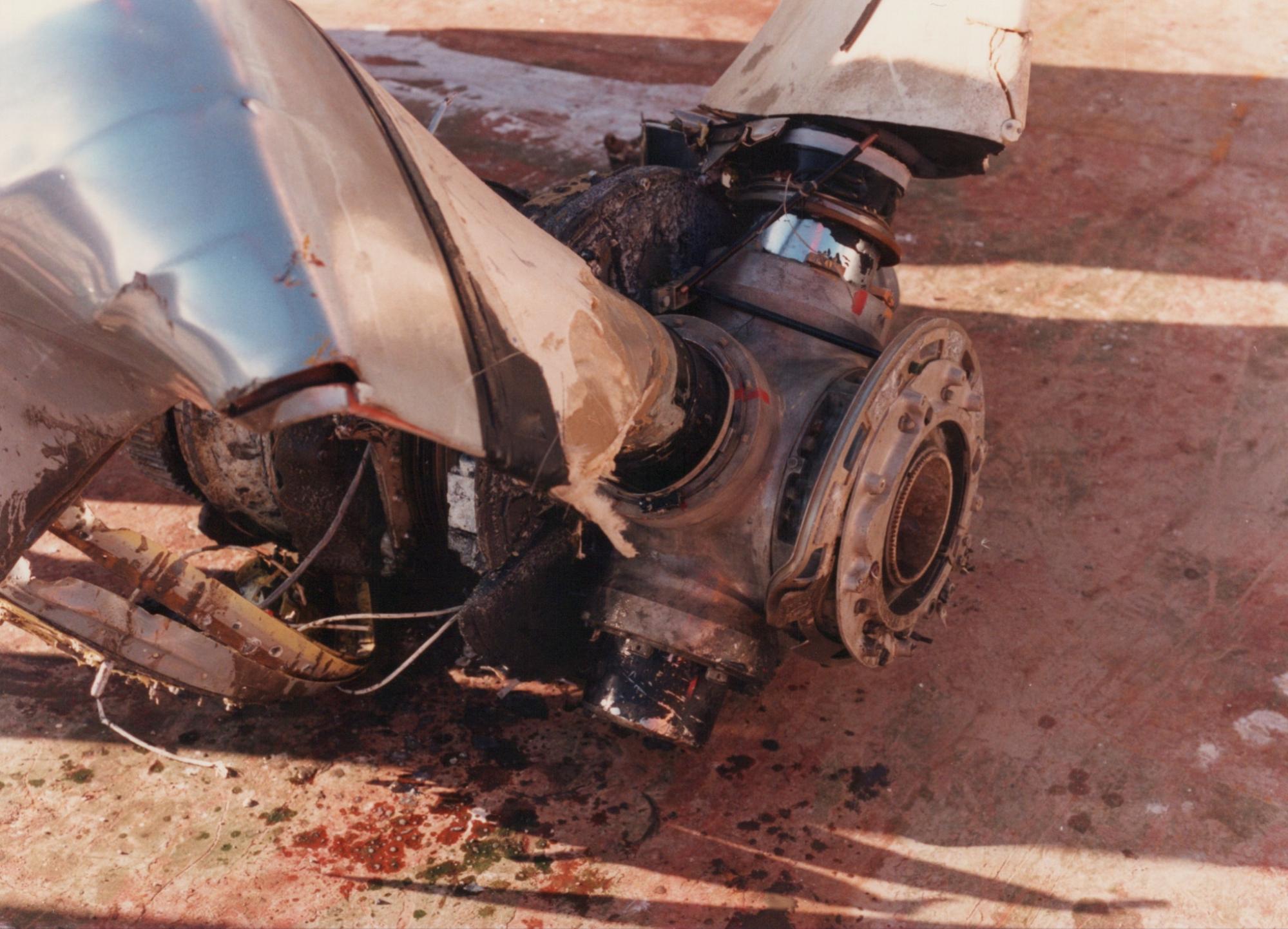
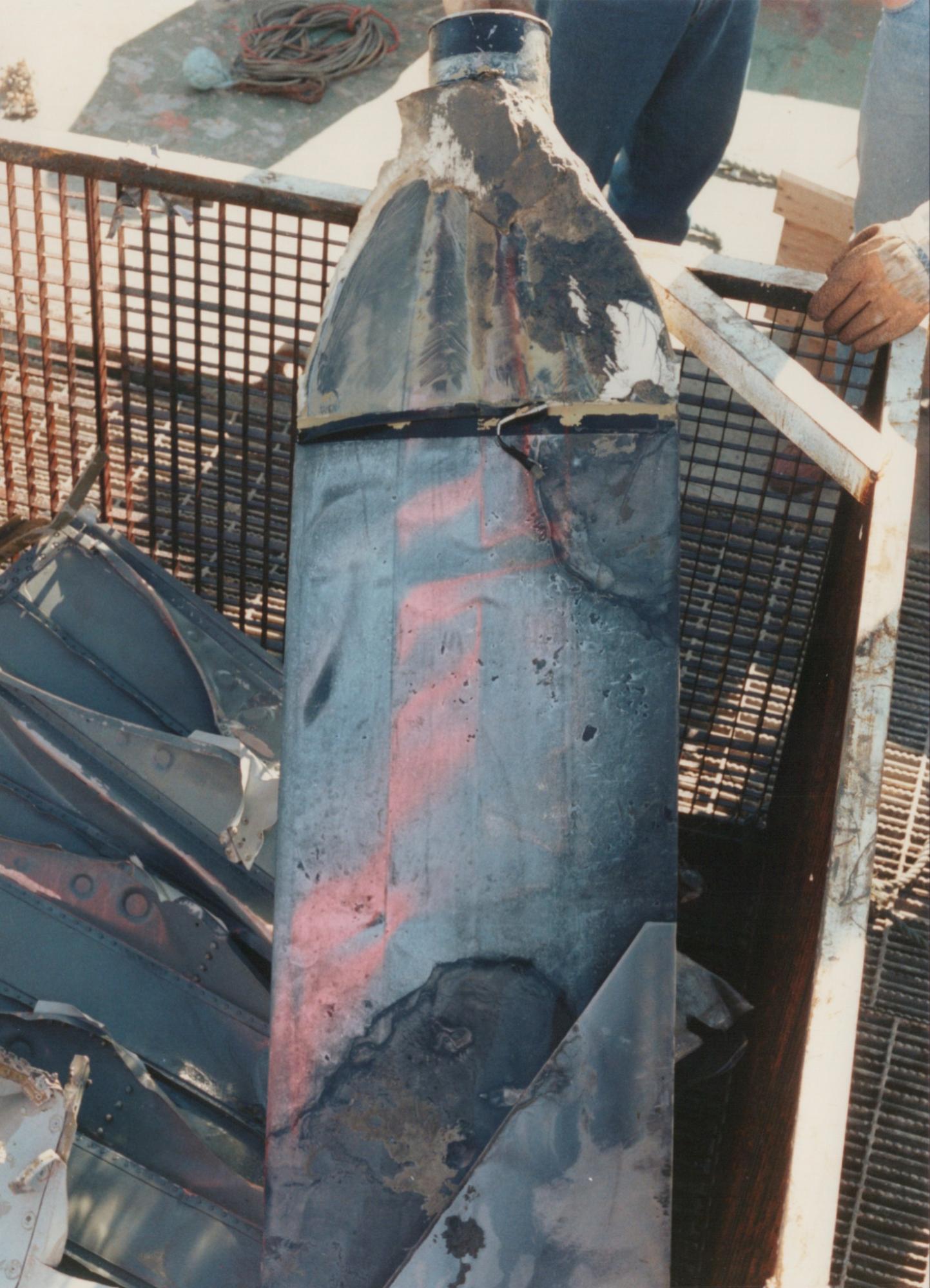
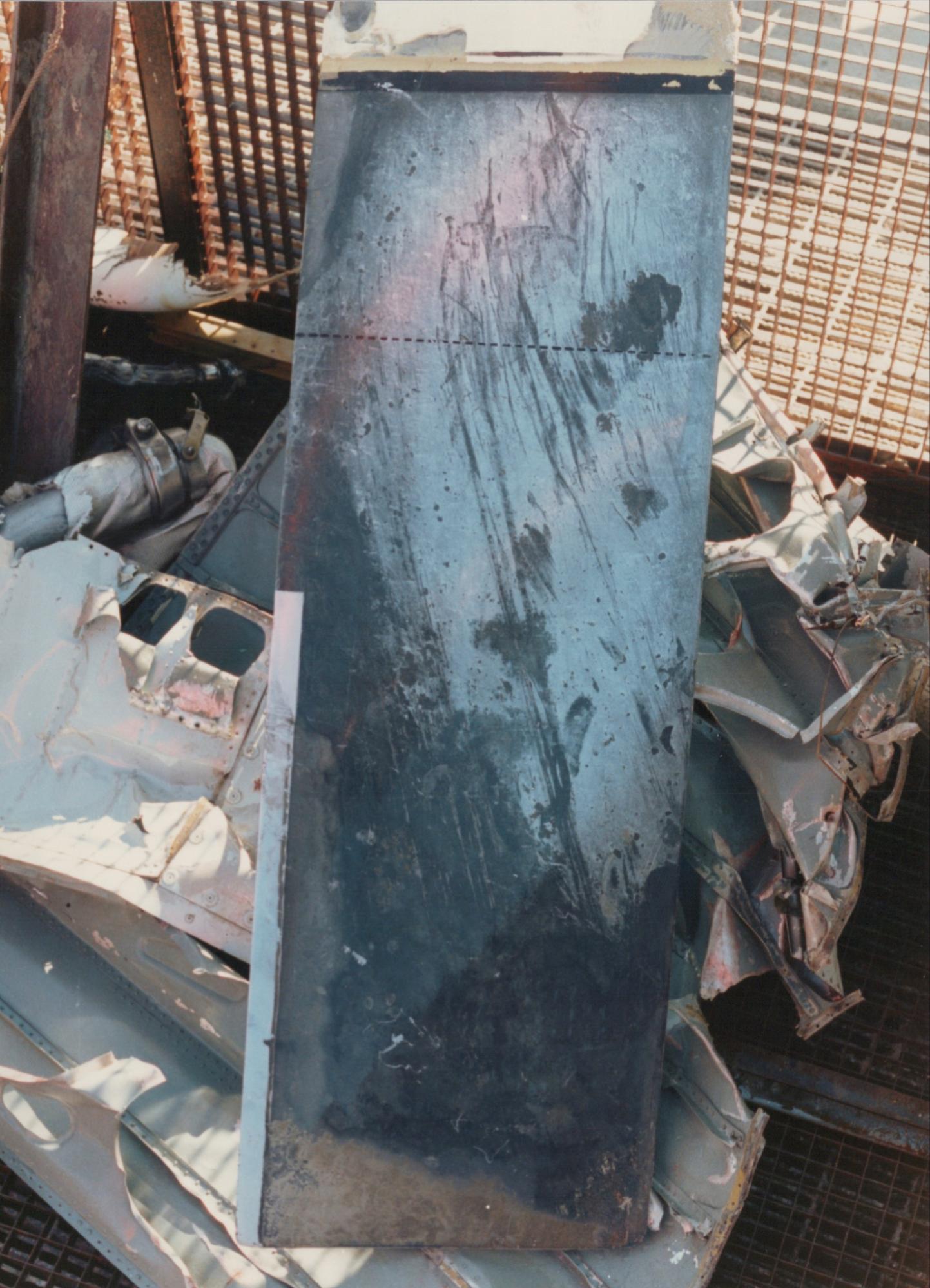
«All evidence indicates this propeller was operating normally up to the moment of impact and no evidence has been found that could have caused this accident. The blade angles at impact correlate very close to each other and are in the upper cruise range.
All evidence indicates this propeller, gearbox and engine were all intact at the moment of impact because (1) the propeller, gearbox and engine were found in close proximity to each other, ie, within an area of 30 meters square (see attachment "B") and in close proximity to the #1 engine (within 67 meters – see attachment "B"), (2) the two blades that separated from the Hub were also found within the same 30 meter square area, (3) the fractured surfaces of the two detached blades which were microscopically examined by Det Norske Veritas of Hovik, Norway showed a single cycle overload fracture, with no evidence of fatigue. This indicates that the blades separated from the Hub due to a massive impact force. Had this impact force occur during flight, the blades would have been severely distorted and/or accrued multiple fractures along their lengths. As neither of these conditions occurred, as seen by attached photos of blades serial numbers B10641 and B11042, the only possible answer is the blades fractured from the Hub at impact with the water and (4) the separation break of the gearbox from the engine was totally different from engine/gearbox separations that occur during flight.» (Hamilton Standard, 1990, p 5)
Right propeller. |
Blade from right propeller. |
Left Propeller
«The L/H propeller was found on the seabed and brought on deck September 26th. All the four blades of this propeller were found present and properly connected to the center hub.» (Veritec, 1990, 89-3506, p. 2)
«It should be noted that no prominent scratches or indentation marks were observed when examining the steel section of the blades, neither on the leading edge nor at the trailing edge region.» (Veritec, 1990, 89-3506, p. 4)
«All evidence indicates this propeller was operating normally up to the moment of impact and no evidence has been found that could have caused this accident. The blade angles at impact correlate reasonably close to each other although they have a wider variation then those of #2 propeller. However, this is not unusual as parts, associated with the measurements for calculating the blade angle, may have distorted from the impact of the crash. The impact blade angles calculated are in the upper cruise range with two blades slightly higher.
All evidence indicates this propeller, gearbox and engine were all intact at the moment of impact because (1) propeller/gearbox were in close proximity to the engine (275 meters apart – see attachment "B") as found on the floor of the sea, (2) the separation break of the gearbox from the engine was totally different from gearbox/engine separations that occur during flight and (3) propeller/gearbox engine were found in the general location of much of the aircraft. For these reasons, propeller/gearbox separation could not have occurred during flight.» (Hamilton Standard, 1990, p. 5)
Left propeller. |
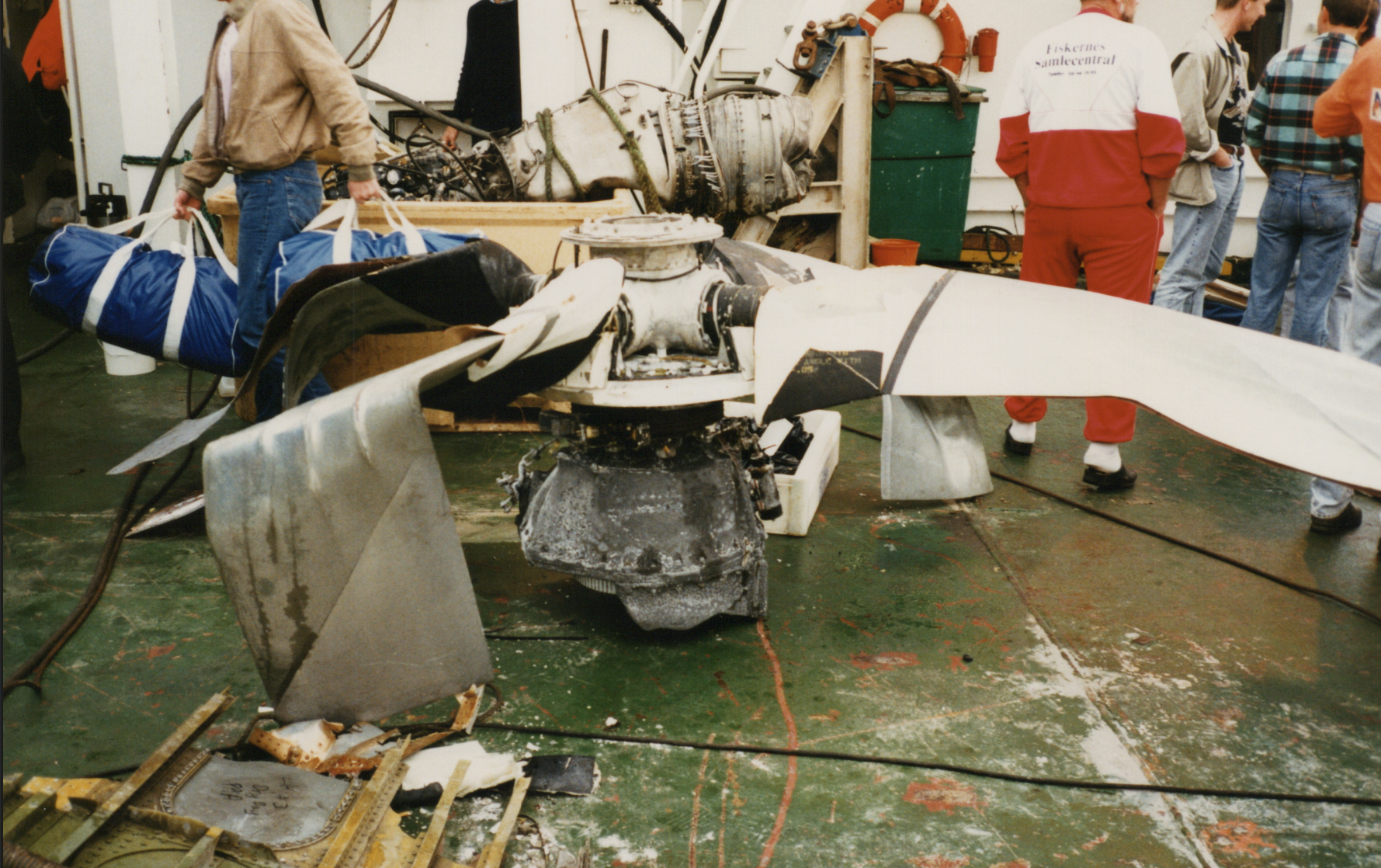
«Since the left propeller ripped out of the left engine and trajectoried some 200 to 300 meters from initial impact to the south-east it is probable the left propeller was rotating at high RPM to produce the required energy for this trajectory.» (Accident Investigation & Research, 1992, p. 11)
Discussion of the Propellers
Veritec, Hamilton Standard, and AIR have each offered hypotheses that are partially contradictory.
Veritec has established that the left engine was stationary at the time of impact, and that the propeller must therefore have been separated from the engine before impact with the water. The propeller was not feathered, which would have been a requirement for it to be stationary in the air. With a blade angle that is not 90 degrees, the propeller would have been driven around by the air, and the left propeller and engine would have sustained the same types of damage as the right engine and propeller.
Hamilton Standard apparently focused on whether the propeller could have caused the accident, and they concluded that it could not. They also concluded that the left propeller had not fallen off in the air, but it is reasonable to assume that they were focused on this as a triggering cause—not whether the propeller fell off as part of the accident sequence. When the right propeller was a few metres from the engine, while the left propeller was 275 metres away, they conclude that the propeller must have been on the aircraft when it hit the water. This does not agree with the technical findings of Veritec, which prove that the left engine shaft was not rotating at the time of impact.
AIR references several Veritec reports in their report, but not the Veritec reports on the engine and propellers (89-3506 and 90-3015). Their conclusion is that the engine was running at full power when the water impact occurred, in order for the propeller to have enough force to be sent 275 metres further. This conclusion is directly contradictory to the physical findings in the engine.
Based on the reports from Veritec and Hamilton, the following seems clear regarding the left engine and propeller:
- The propeller detached before the aircraft hit the water
- The gearbox did not fail
- There are no traces of the propeller being struck by anything
The propeller blades are bent backwards, but this is not consistent with impact against the water. The propeller, after tearing loose from the engine, will fall with the heaviest part downward: the remains of the gearbox. The propeller does not have torsional damage indicating it was rotating at high speed, as the right propeller did. It seems unlikely that the propeller could have hit the water and bent the blades backwards.
Veritec also concluded that there are no scratches or notches in the propeller blades themselves, which one would expect to see if the propeller had been struck by a physical object. That the gearbox would fail when the propellers were merely windmilling and the engine was providing no power is highly unlikely.
One could envision a scenario where the left propeller was struck by wreckage when the nose section of the aircraft was separated from the rest of the fuselage, but there is a logical flaw since the aircraft broke in two from left to right.
An alternative hypothesis is that the propeller blades were bent backwards by a shock wave from an explosion, and that this created asymmetric rotational forces that immediately caused the propeller to separate from the engine. The propeller then fell freely with the gearbox/rear side first and sustained minimal further damage upon impact with the water.